
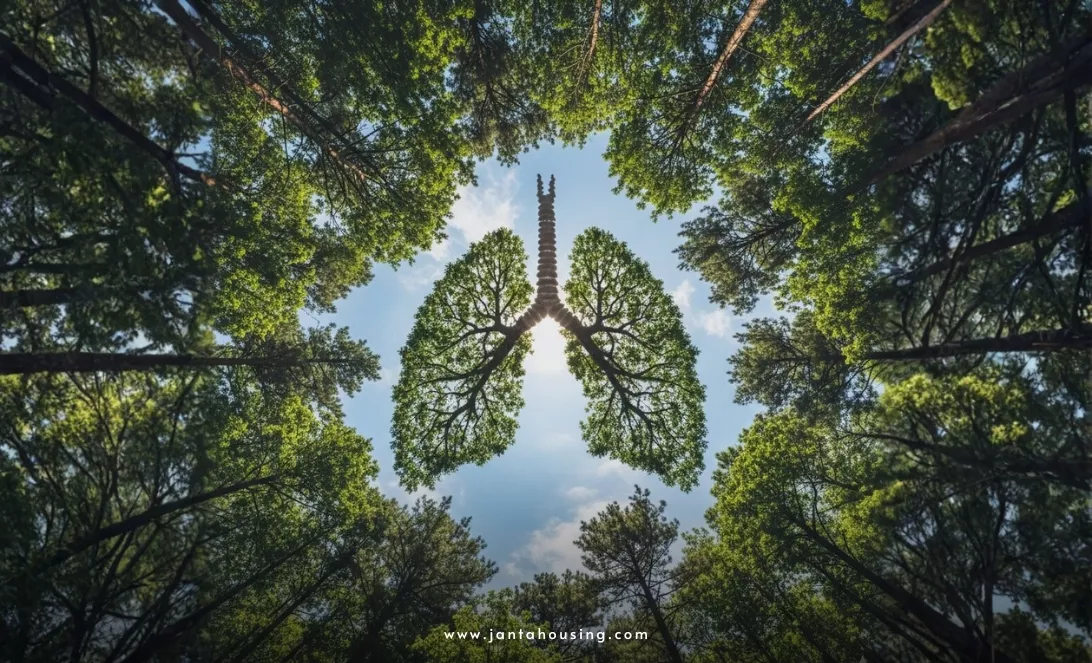
Nestled on the northern edge of Punjab, Haryana and their capital Chandigarh, the majestic Shivalik Hills stand tall as a silent guardian to the Tricity region. Beyond their scenic charm and historical grandeur, these hills play a crucial ecological role. They are, quite literally, the lungs of the Tricity region comprising Chandigarh, Panchkula and Mohali.
A Natural Shield for Urban Life
The Shivalik range forms the first fold of the mighty Himalayas, stretching across parts of Himachal Pradesh, Haryana and Punjab. For the Tricity region, the range is far more than just a beautiful backdrop for the luxury highrise residential projects of Mohali and Panchkula. The range acts as a natural barrier against pollution, bringing in cold and clean winds.
In summers, the thick vegetation of Shivalik helps in maintaining cooler microclimates, while during winters, it traps dust and particulate matter, reducing the pollution load in the air Tricity residents breathe.
The Green Breathing Belt
The dense forests of Pinjore, Morni, Kansal and Nepli are part of the Shivalik ecosystem and serve as massive carbon sinks. These forests absorb thousands of tonnes of carbon dioxide each year, releasing clean oxygen and refreshing the atmosphere of the Tricity region.
This natural Green Belt Also Contributes to –
- Temperature Regulation – The belt helps in lowering urban heat island effects.
- Improved Air Quality – The hills improve the Tricity’s air quality through natural filtration of pollutants.
- Groundwater Recharge – As forest soils retain and gradually release water to lower areas.
- Biodiversity Preservation – The hills also provide habitat to numerous flora and fauna of the region that further helps in keeping the ecosystem of the region balanced.
The Lungs of the Tricity
Apart from cleansing the air, the Shivaliks also protect the Tricity region from environmental degradation. Their forest cover prevents soil erosion and stabilizes the slopes, while streams originating here feed seasonal rivers like the Sukhna Choe, which ultimately sustains Sukhna Lake.
The hills natural vegetation and soil structure also help in controlling surface runoff during monsoons, mitigating the risk of flash floods that can otherwise impact the plains below.
The residents of Chandigarh, Panchkula and Mohali enjoy clearer skies, cleaner air and stunning views thanks to the lush green cover of these ranges. The hills act as a natural air purifier, filtering dust and pollutants before they can settle over the urban expanse, thereby keeping the region largely free from heavy smog.
Conclusion
The Shivalik Hills are more than just a scenic skyline, they are the living lungs that sustain the air, water and vitality of our Tricity region. Their forests purify our air, stabilize our soil and nurture our water sources. As the Tricity grows, protecting these hills is not just about saving nature, it is about saving the very breath of our cities. The calm, pollution free environment created by the Shivalik Hills is one of the major reasons why the Tricity region continues to be regarded as one of India’s most livable and serene urban regions.