Water is one of the quiet heroes of a well designed landscape. At JLPL Falcon View, rainwater harvesting is not an afterthought, it is an integrated system that keeps the 18 acre central landscape lush while reducing demand on the municipal supplies. Let us see how the rooftop tank system works, why it is effective for Falcon View and exactly what goes into keeping it reliable and healthy year round.
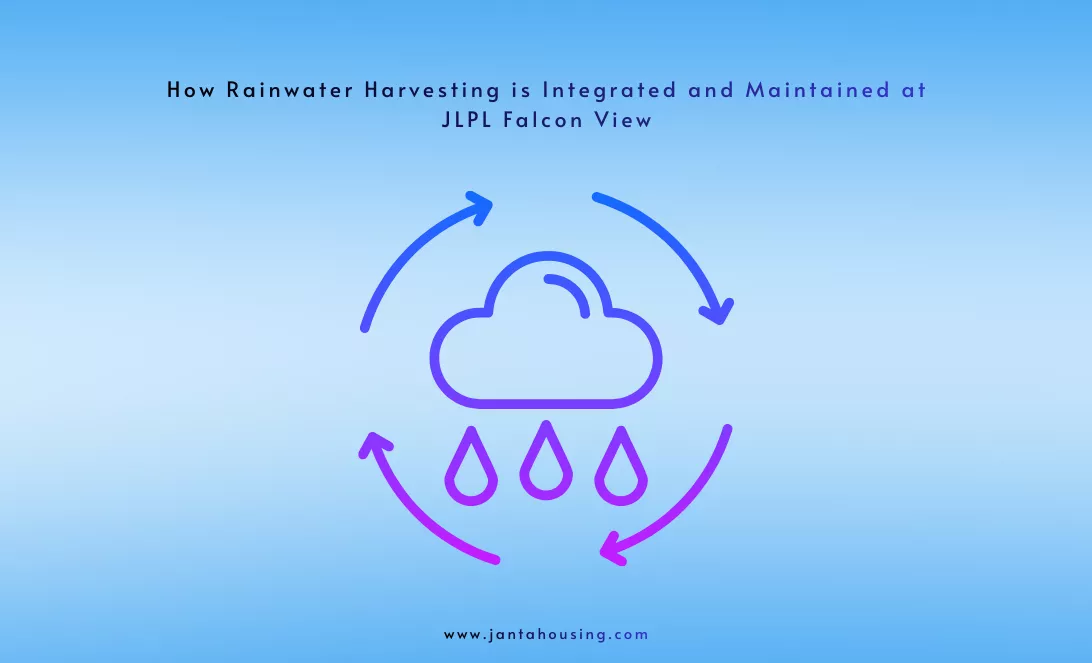
Overview – A Simple, Effective Loop
Falcon View’s Approach is Elegantly Straight Forward
- Rain falls on building rooftops and is collected via gutters and downpipes.
- The water is directed into rooftops storage tanks.
- From those tanks, gravity and pumps convey water down through buried and exposed pipes to irrigation mains.
- Irrigation zones (sprinklers, drip lines, hand watering points) use that harvested water for all landscape and plantation needs.
- Excess water and overflows are safely routed to storm drains or on site infiltration zones.
Collection happens at the rooftop level and storage is distributed, the system reduces transmission losses, enables staged usage, and supports faster maintenance access.
System Components – What’s Actually Installed
Catchment + Conveyance
- Catchment surfaces – Building roofs (designed or retrofitted to be suitable for potable agnostic harvesting).
- Gutters & Downpipes – Sized for the design storm and fitted with leaf screens and debris traps.
- First Flush Diverters – These devices divert the initial runoff away from tanks to keep the stored water cleaner.
Storage – Rooftop Tanks
- Rooftop Tanks – Multiple modular tanks placed on building terraces/roofs. Rooftop storage reduces the need for long transmission mains, saves pumping energy for initial lift away from tanks to keep the stored water cleaner.
- Overflow Piping – Prevents over pressurization during heavy storms, directed to safe outlets. Infiltration basins.
Distribution
- Supply Mains – Pipes carry water from the rooftop tanks to the landscape irrigation network.
- Pumps and Controls – Booster pumps with pressure sensors and automated controls deliver appropriate pressure to sprinklers and drip zones. Variable speed pumps are used at some points to save energy and match demand.
- Backflow Prevention – This is essential to keep the harvested water separate from the potable supply and to meet safety requirements.
Filtration and Treatment
- Basic Filtration – Mesh screens and sediment traps at the inlets – cartridge or filter units before pumps to protect equipment and irrigation emitters.
- Optional Treament – If water is used for any sensitive areas, UV or chlorination options can be added – but for general landscape irrigation, mechanical filtration and first flush devices are typically sufficient.
Monitoring and Controls
- Level Sensors and Flow Meters – Monitor tank levels and irrigation usage.
- Automated Controllers – Schedule irrigation and switch between harvested water and main water if tanks are empty.
How the System Operates
- On rainy days, rooftop water is routed through leaf screens – first flush diverter – rooftop tank inlet.
- Level sensors update the irrigation controller and building operations dashboard.
- When irrigation is scheduled, the controller triggers pumps to draw from the rooftop tanks and deliver to irrigation zones.
- If tank levels drop below a configurable threshold, the system seamlessly switches to municipal supply (via an automatic valve) so plants never suffer.
- After storms, overflow paths protect the tanks and site drains, maintenance teams are notified if debris or abnormal sediment accumulates.
Environmental and Community Benefits
- Reduced Municipal Demands – Harvested rainwater offsets irrigation needs, especially during monsoon recovery and shoulder seasons.
- Stormwater Management – Capturing rooftop runoff reduces peak flows to street drains and lowers erosion risk.
- Healthier Landscape – Reliable irrigation keeps trees and shrubs vigorous, which improves microclimate and air quality across Falcon View.
- Educational Value – Visible tanks, signage and resident communications raise awareness about sustainable water use in the community.
Conclusion
At JLPL Falcon View, rainwater harvesting is more than just a green badge, it is a pragmatic, well maintained system that keeps landscapes thriving while conserving municipal resources. Through rooftop collection, smart distribution, routine preventive maintenance and data driven controls, Falcon View demonstrates how residential communities can combine aesthetics with sustainability to create resilient landscapes for residents today and for the future.
Frequently Asked Questions
- Is harvested water safe for plants?
Yes, with basic filtration and first flush diversion, rooftop harvested water is well suited for irrigation.
- Will rooftop tanks need structural reinforcement?
Tanks must be installed on structures designed to take the live load, Falcon View ensures tanks are placed on appropriately rated supports or rooftops engineered for the load.
- How often do tanks need cleaning?
A visual check monthly, light flushing quarterly and a deeper inspection on an annual basis is typical.